
The Ultimate Guide to Pond Weed Control & Muck Removal
Overview
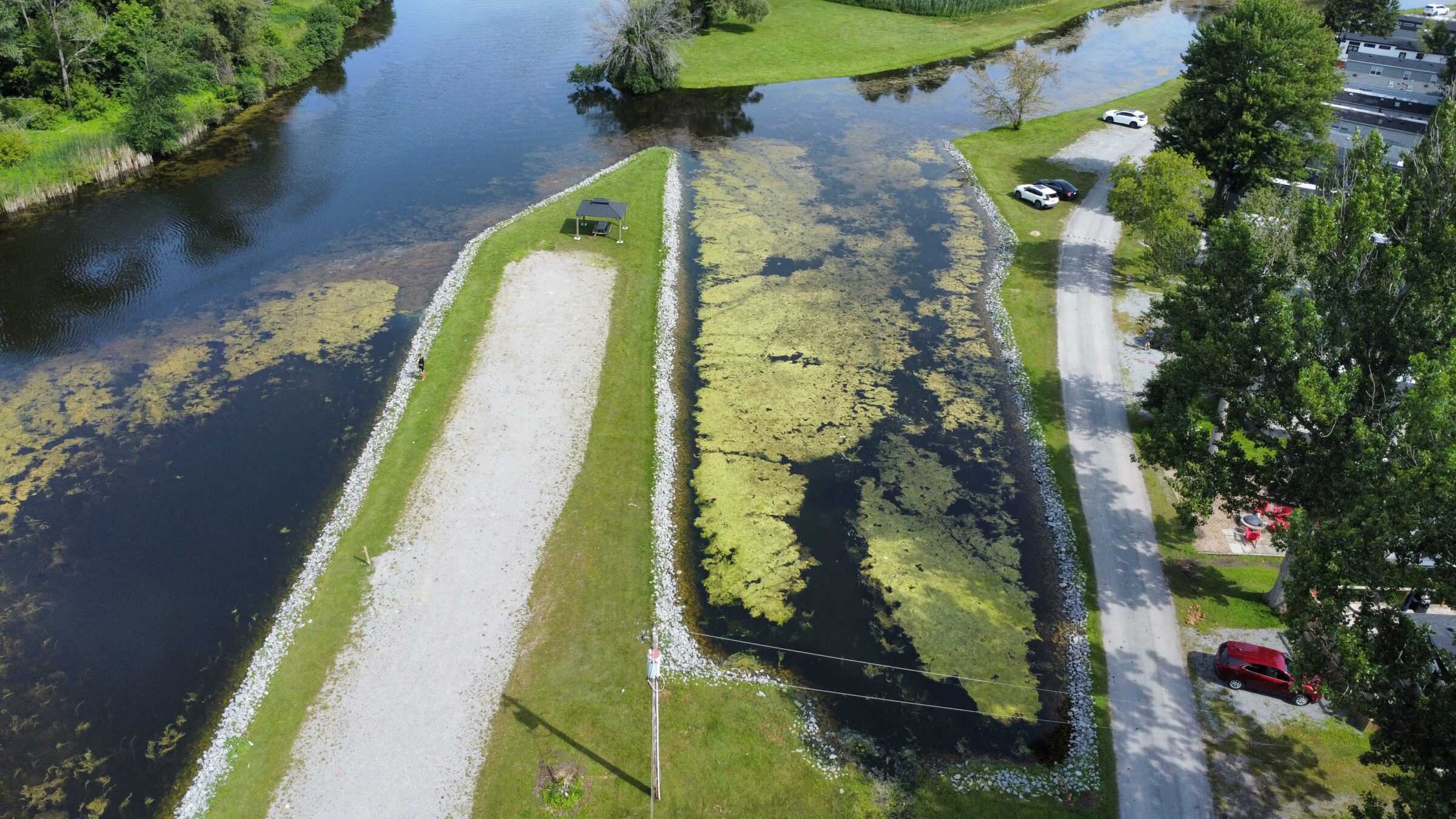
Every spring, shoreline owners across Southern Ontario look out at pristine, crystal-clear water, only to watch it transform into a dense, choked jungle of weeds and algae by mid-July. Suddenly, swimming becomes unappealing, and the waterfront investment you worked so hard for loses its beauty and usability.
If you try to solve the issue with generic remedies, like throwing a store-bought aquatic herbicide into the water or spending your weekends dragging a manual cutter behind your dock, you risk making the problem far worse. Cutting without proper collection fragments invasive species and spreads them rapidly across your bay, while unpermitted chemical treatments can lead to steep provincial fines. Meanwhile, the true culprit, nutrient-rich bottom muck, continues to build up beneath the surface, feeding next year’s growth.
To regain control of your waterfront, you need a proven, systematic strategy that addresses both the visible surface growth and the underlying nutrient cycle. This comprehensive guide details how to correctly diagnose your aquatic growth and combine mechanical harvesting with aeration to restore your pond long-term.
Identify the growth before choosing a treatment
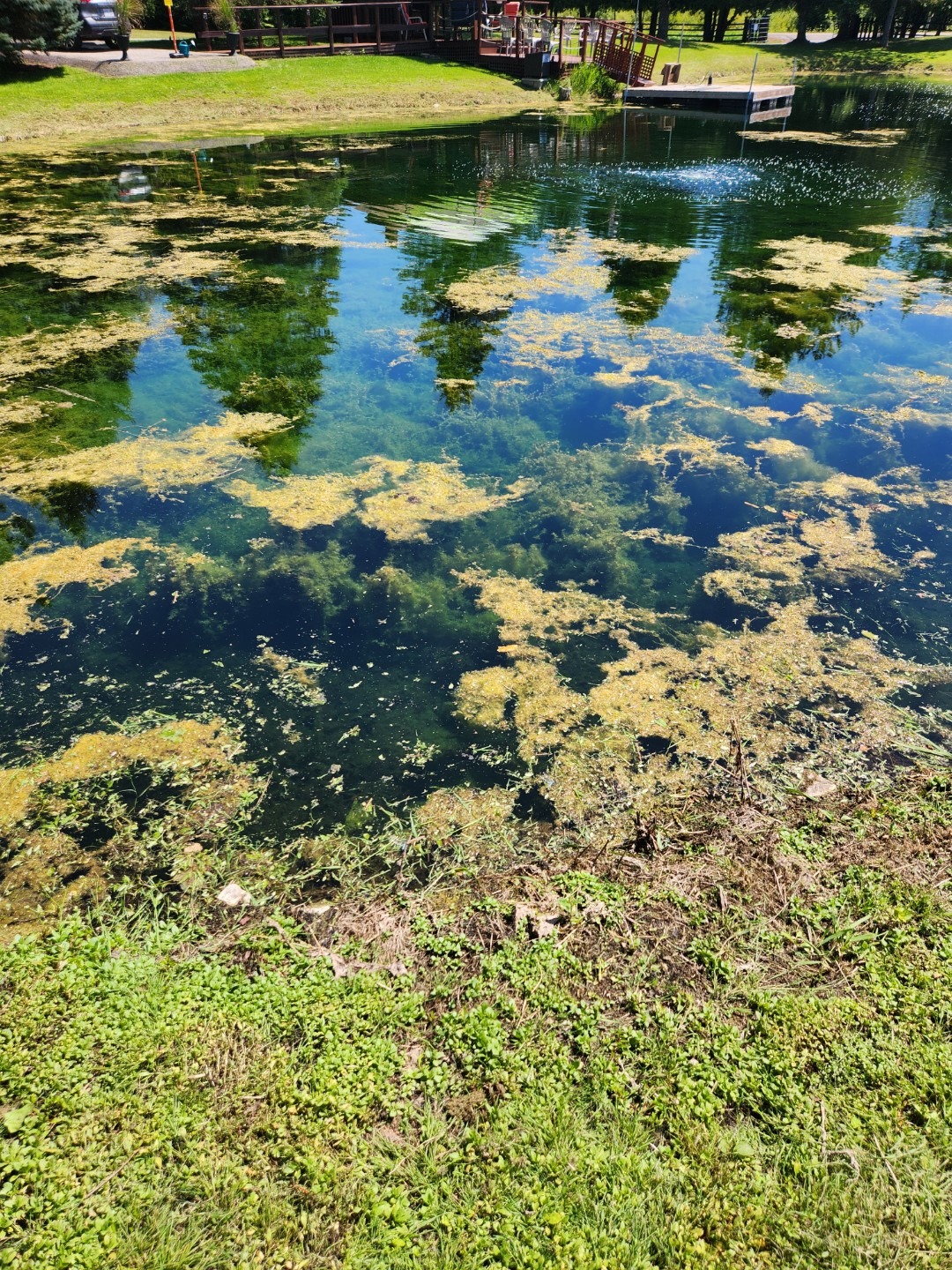
“Pond weed” is a broad catch-all term, not a single plant or uniform problem. Because chemical, physical, and mechanical treatments vary widely by species, you must accurately categorize the growth in your waterbody before taking action.
Submerged Vegetation (Underwater Growth)
Submerged plants root directly into the bottom sediment and grow almost entirely underwater, though some species produce dense surface mats by late summer. These plants entangle propellers, wrap around swimming legs, and disrupt water flow.
- Eurasian Water-Milfoil (Myriophyllum spicatum): A highly aggressive invasive species with feathery leaves arranged in whorls of 4 or 5 around the stem. It produces fragile stem fragments that root easily.
- Northern Water-Milfoil (Myriophyllum sibiricum): A native species that looks very similar to Eurasian water-milfoil. It grows with much more natural ecological control and rarely forms massive, choking surface mats unless local nutrient levels are exceptionally high. Northern water-milfoil has fewer leaf segments (about 5–10 pairs per leaf, compared with 12–21 pairs on invasive Eurasian water-milfoil). Ontario provides identification guidance to help distinguish invasive Eurasian water-milfoil from native Northern water-milfoil.
Mechanical cutting or raking can break milfoil stems into viable fragments. In the case of Eurasian water-milfoil, these fragments can drift, settle elsewhere, root, and establish new weed beds. For this reason, proper identification is critical before undertaking mechanical removal.
Floating Vegetation (Surface Drift)
Floating plants either root in the bottom sediment while sending leaves to the surface, or drift completely free without bottom roots.
- Duckweed (Lemna minor): Extremely small (1 to 8 mm), free-floating green plants that multiply rapidly in sheltered, nutrient-dense waters, forming thick, carpet-like coatings that block sunlight and interfere with recreation and water movement.
Duckweed presents a different mechanical-removal challenge than larger aquatic weeds. Standard mechanical weed harvesters are generally designed to cut, collect, and convey larger pieces of rooted or submerged vegetation. Duckweed is so small and lightweight that conventional cutting and collection systems push it across the water rather than effectively capture it; individual plants can also pass through gaps in collection nets or screens and escape back into the water.
Effective physical removal is better suited to fine-mesh surface skimmers, floating booms or containment systems used to concentrate the plants, and pump- or vacuum-based collection equipment capable of capturing the small floating material. Once concentrated, the duckweed must be removed from the water and disposed of on land so that it does not simply redistribute across the waterbody. For larger or persistent infestations, manual removal may need to be combined with other management approaches, particularly measures that address the nutrient and stagnant-water conditions that promote rapid duckweed growth.
Emergent Vegetation (Shoreline & Shallow Water)
Emergent plants take root in wet soil or shallow water near the banks and project most of their foliage well above the water line.
- Native Cattails & Native Phragmites: Provide fish spawning habitat and natural shoreline stabilization.
- Invasive Phragmites (Phragmites australis): A tall, dense European grass that chokes out native wetland biodiversity, spreads rapidly via tough underground rhizomes, and requires aggressive, targeted intervention. Native and invasive phragmites can look similar from a distance, but they require different management. Ontario’s phragmites identification guide highlights features used to tell them apart.
Algae (Non-Vascular Growth)
Algae lack true leaves, stems, or root structures. It generally manifests as suspended green water (planktonic algae) or thick, slimy, floating surface mats (filamentous algae).
Algae requires entirely separate management protocols from rooted weeds. Applying a traditional aquatic weed harvest or herbicide designed for rooted plants will not resolve an algae bloom, and clearing rooted weeds can sometimes trigger a severe algae outbreak by freeing up dissolved nutrients.
Understand the Shallow Water Nutrient and Muck Cycle
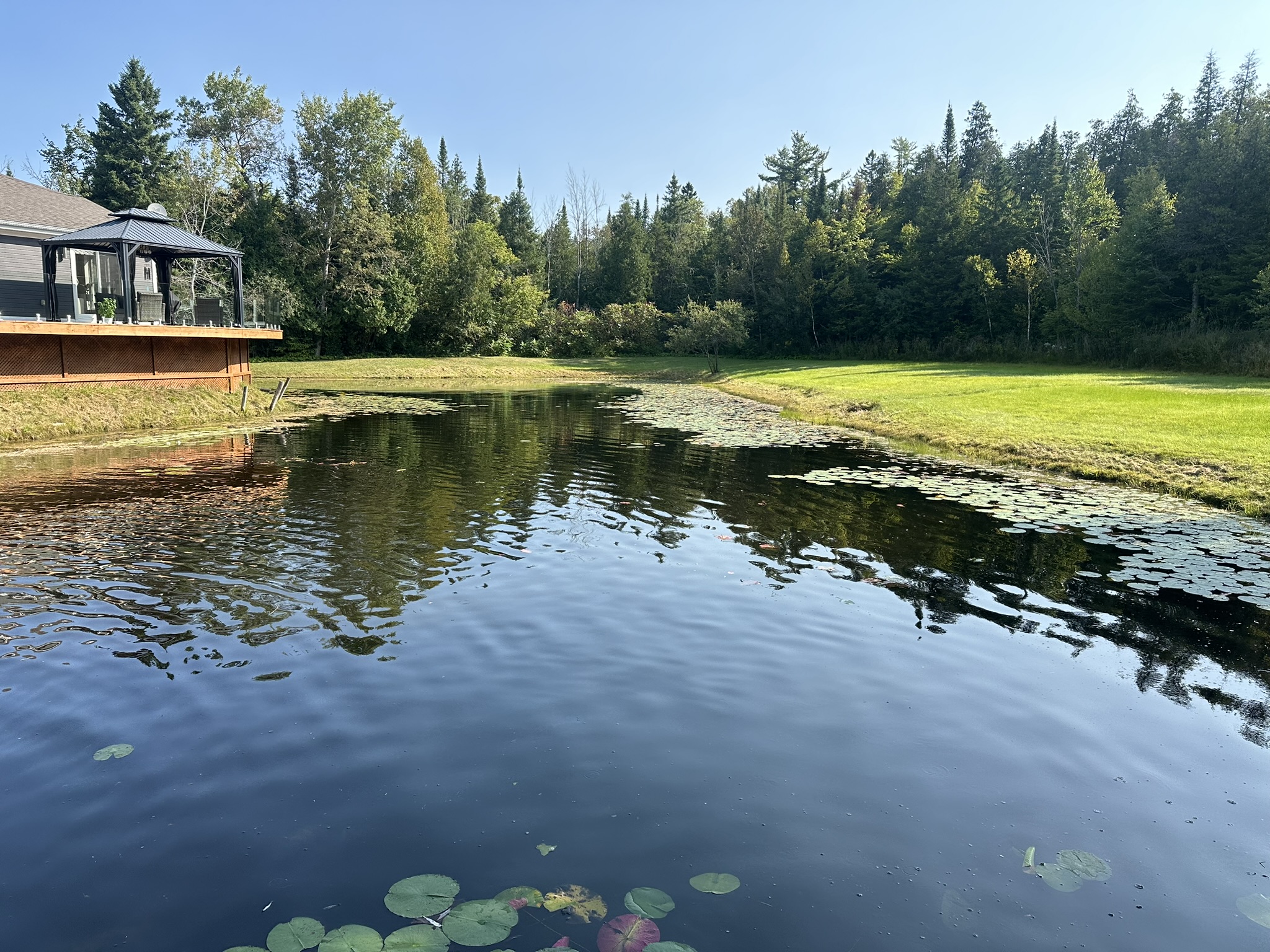
Clear water in May does not mean clear water in August. Aquatic plants thrive on three primary variables: sunlight, warm water temperatures, and sediment nutrients.
Sunlight Penetration
Clear water can still support heavy weed growth. In shallow water, sunlight can reach the bottom sediment, allowing rooted plants to germinate, establish, and grow toward the surface.
That is why pond edges often fill with vegetation first. Water that looks clear and open in spring can develop dense weed beds by July and August. Depth, bottom conditions, nutrients, and existing vegetation all influence how quickly weeds develop.
Nutrient Loading
Nitrogen and phosphorus fuel aquatic plant and algae growth. Runoff from fertilized lawns, pastures, fields, livestock areas, and yard waste can carry these nutrients directly into the pond, while animals entering the water can add additional organic material.
Reducing fertilizer use near the shoreline, maintaining a vegetated buffer, and keeping leaves, grass clippings, and manure away from the water can help limit nutrient inputs. Prevention is most effective before excessive growth becomes established.
Muck Accumulation
Ponds naturally change as they age. A young pond may begin deep and clear, but dead plants, leaves, and other organic matter gradually settle to the bottom and decompose.
Over time, this material builds into a soft, nutrient-rich layer of muck. Aquatic plants root into it, die back, and add more organic matter each season. As the muck accumulates, the pond becomes shallower, allowing sunlight to reach more of the bottom and creating more habitat for weeds and algae.
Without management, this cycle can gradually transform open water into dense vegetation, and eventually a waterbody that begins to take on the characteristics of a marsh.
Accelerated Succession
A cutter or rake can break certain aquatic weeds into smaller pieces. With Eurasian water-milfoil, those fragments can drift, settle, and re-root elsewhere. Cutting may also leave roots and rhizomes in the sediment, allowing new growth to emerge. Mechanical removal can still be effective, but the cut vegetation must be collected and removed rather than left to drift.
Removed plants should be placed on dry ground where runoff drains away from the pond. If vegetation is left in the water, it decomposes, returns nutrients to the system, and can reduce dissolved oxygen levels that fish depend on.
Compare Mechanical, Biological, and Manual Control Options
No single treatment method provides a permanent fix for aquatic plant growth. Choosing the correct tool depends on plant type, water depth, total volume, and long-term land management goals.
Hand Pulling & Raking
Hand tools such as aquatic rakes, weed razors, and pullers is the low-cost way for shoreline owners to manually remove weeds from shallow water.
- Best Use Case: Small, localized patches within roughly five feet of docks, swim ladders, and accessible shorelines.
- Operational Limitation: Manual removal becomes more difficult, time-consuming, and less safe farther from shore. Hand pulling can remove more of the plant than cutting, but it still disturbs bottom sediment, clouds the water, and may leave root structures behind. With species such as Eurasian water-milfoil, pulling can also break stems into fragments that drift away and establish new growth. Every piece must be collected and removed from the water, making manual removal impractical for large or widespread infestations.
Mechanical Harvesting
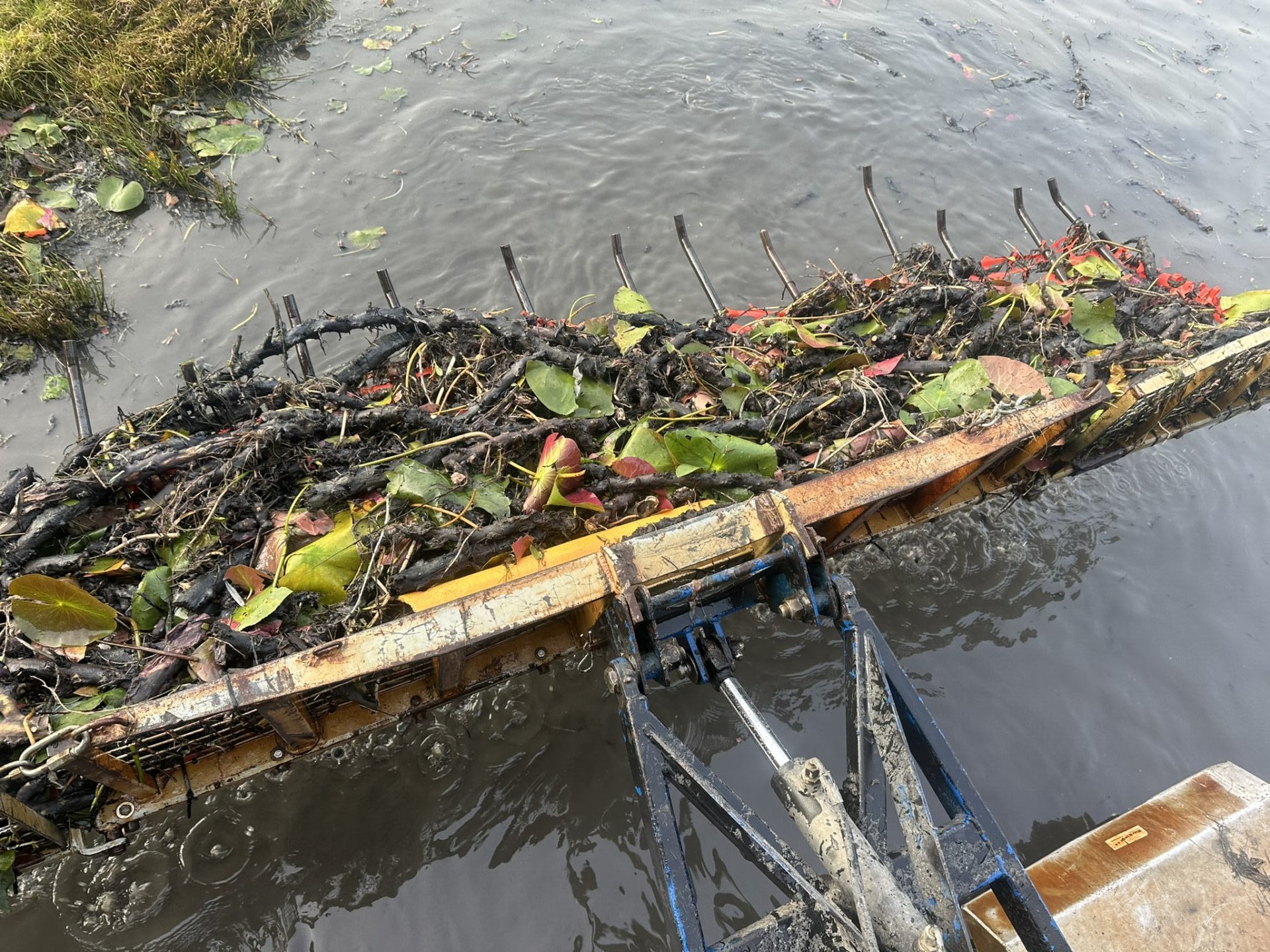
Aquatic weed harvesters function much like underwater combine harvesters, using cutter bars to cut dense vegetation below the surface while conveyor systems lift the biomass into an onboard holding area. Mechanical harvesting can clear large areas much faster than hand tools, restoring access to swimming areas, docks, boat slips, navigation channels, and marinas.
- Best Use Case: Large, dense infestations where the volume of vegetation or size of the work area makes manual removal impractical.
- Operational Limitation: Harvesters cut and collect standing vegetation but do not remove the underlying root systems or nutrient-rich organic sediment. Fast-growing plants can therefore regenerate after harvesting if the conditions supporting their growth remain. Mechanical harvesting is often an important first step in clearing an established infestation, but long-term control may require additional management to address roots, sediment, nutrients, and recurring growth.
Aquatic Herbicides
Systemic and contact aquatic herbicides are chemical treatments applied to the water or targeted plant foliage to suppress or kill specific aquatic weed species. While they can provide effective control, product selection is only one part of the decision, particularly in Ontario, where aquatic pesticide applications are regulated.
- Best Use Case: Targeted or spot treatment of aggressive aquatic weed infestations where physical removal is impractical or where specific invasive species require chemical control.
- Operational Limitation: Herbicides generally provide short-term or seasonal control and may require repeat treatments as plants regenerate. In Ontario, pesticide applications to natural or connected waterbodies generally require a licensed exterminator, unless a specific exemption applies. Herbicides also do not remove accumulated muck or underlying sediment; treated vegetation eventually dies and settles to the bottom, returning organic material to the pond.
Aeration
An aeration system uses a shore-mounted compressor, self-sinking weighted airline, and bottom-mounted diffusers to circulate water and add oxygen throughout the pond. Air released near the bottom lifts deeper, oxygen-poor water toward the surface, where it mixes with atmospheric oxygen and returns through the water column.
- Best Use Case: Improving oxygen levels and creating conditions that support aerobic decomposition of organic muck and sludge. By improving bottom conditions, aeration can help reduce the organic material and nutrients that contribute to future weed and algae growth.
- Operational Limitation: Aeration changes water quality and sediment conditions, but it does not physically remove established vegetation or accumulated muck. A diffuser will not clear a mature weed bed around a dock or swimming area. Its greatest value is as part of a longer-term management strategy, particularly after excessive vegetation has been physically removed.
Biological Digestants
Biological treatments use specialized natural bacterial strains and enzyme formulations, available in liquid, powder, or pellet forms, to break down organic material and help manage the nutrients that fuel recurring weed and algae growth. These treatments work particularly well when paired with aeration, which provides the oxygen microbes need to process organic material more efficiently.
- Best Use Case: Reducing soft organic muck, supporting the breakdown of bottom sludge, and helping manage excess nutrients that contribute to recurring plant and algae growth.
- Operational Limitation: Biological treatments are slow-acting maintenance tools, not immediate clear-out solutions. They require an ongoing treatment schedule and perform best in well-oxygenated water supported by an active aeration system. They also do not replace physical weed removal, as aquatic weeds and algae require different management approaches. A common long-term strategy is to first remove excessive vegetation and muck, then use aeration and biological treatments to improve bottom conditions and help prevent the pond from returning to its former state.
Evaluate Project Scope, Pricing, and Equipment Costs
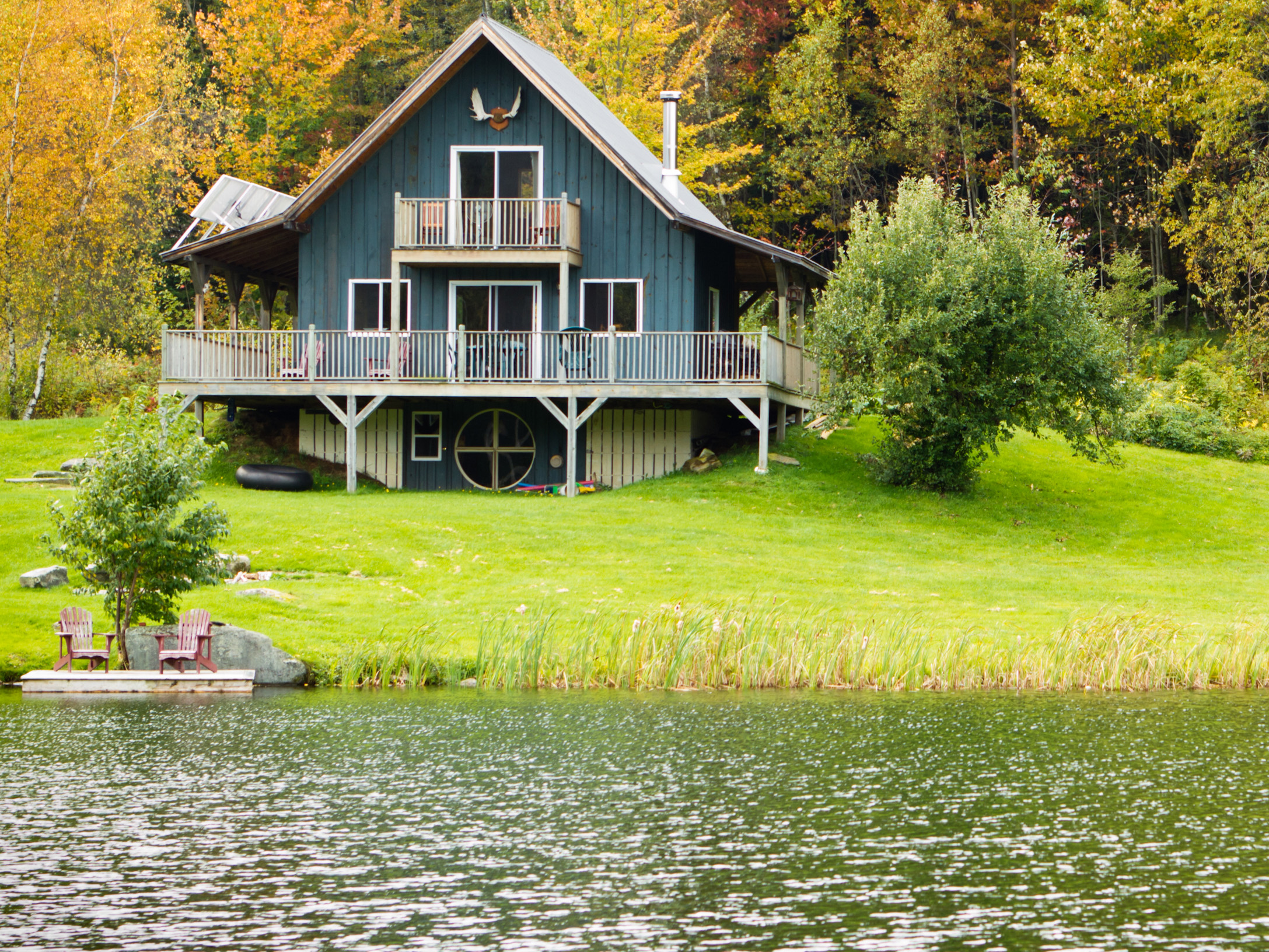
Pricing depends on weed density, the size of the working area, the mix of machinery and manual labour required, and how the harvested material needs to be handled.
Weeds B Gone’s mechanical clear-out projects start at approximately $5,500. If you cannot dispose of harvested vegetation on your property, disposal starts at approximately $1,000 and increases with the volume removed. Our ongoing maintenance plans start at approximately $800 per month.
The lowest initial price does not always mean the lowest long-term cost. We recommend combining methods that work together, starting with the right physical removal, then using solutions such as aeration, biological treatments, muck management, and ongoing maintenance to address the conditions that allow weeds to return. Contact Weeds B Gone for a personalized quote.
To ensure you receive a thorough quote, always ask your aquatic management contractor for explicit details on these four factors:
- Exact Square Footage: What specific square footage or channel dimensions will be physically cut and harvested?
- Methodology: Will the work be performed manually, or with heavy-duty commercial harvesting equipment and transport barges?
- Disposal Logistics: Will the harvested biomass be composted on-site past the 15-meter setback line, or hauled off-site for disposal?
Take Back Your Waterfront Today
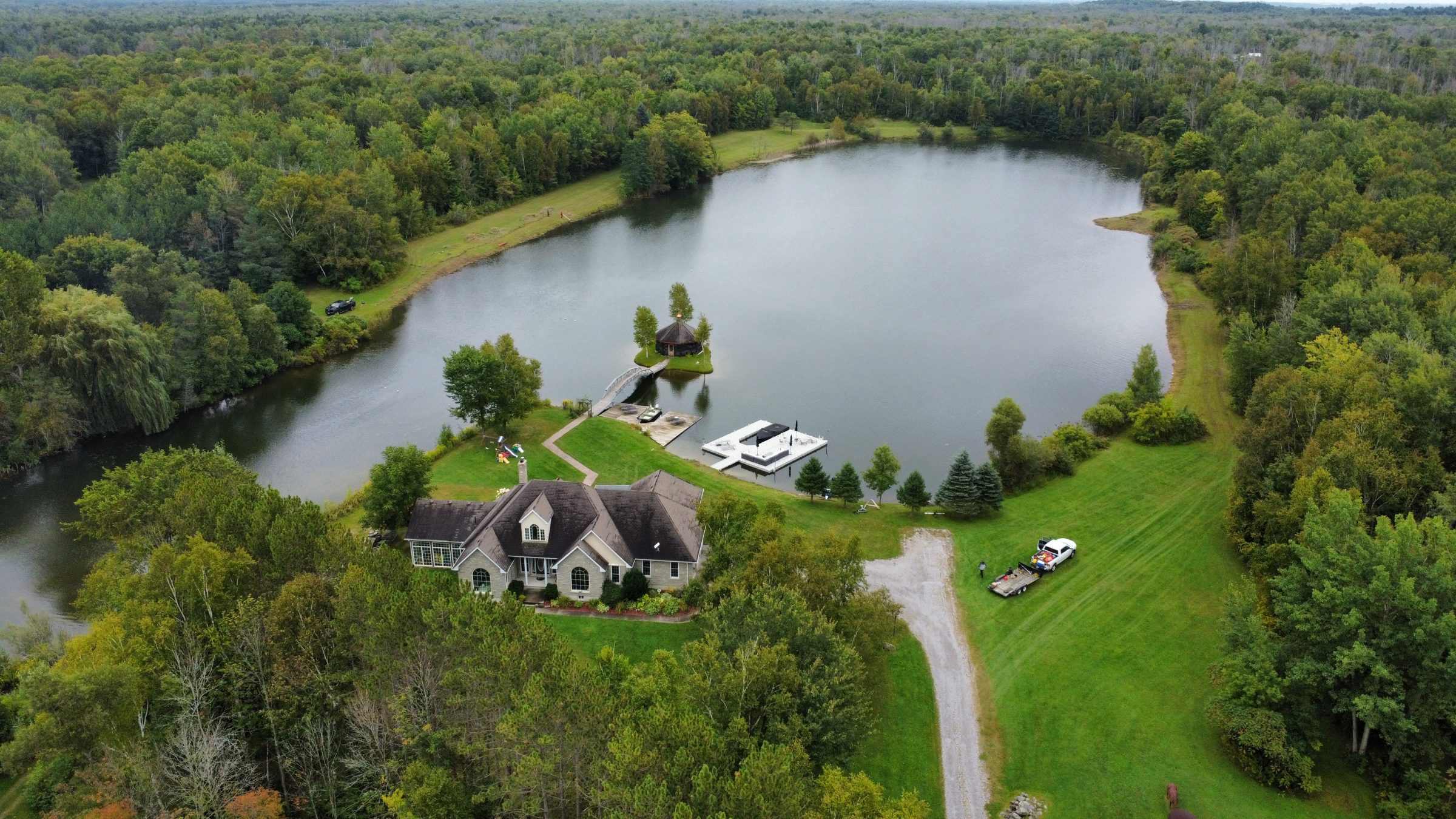
Don’t let aggressive aquatic weeds, dense surface algae, and soft organic muck steal another summer on the water. Managing a waterbody requires the right machinery, local regulatory expertise, and a comprehensive strategy that tackles the root cause of weed growth.
At Weeds B Gone, our team handles every step of the process: from heavy mechanical harvesting to long-term aeration and biological muck removal.
Request A Quote from Weeds B Gone today to receive a customized pond weed control plan tailored to your property. Simply send us photos of your shoreline, water surface, and equipment access paths, and our experts will design a turnkey plan to clear your water and restore your waterfront.
Tags: